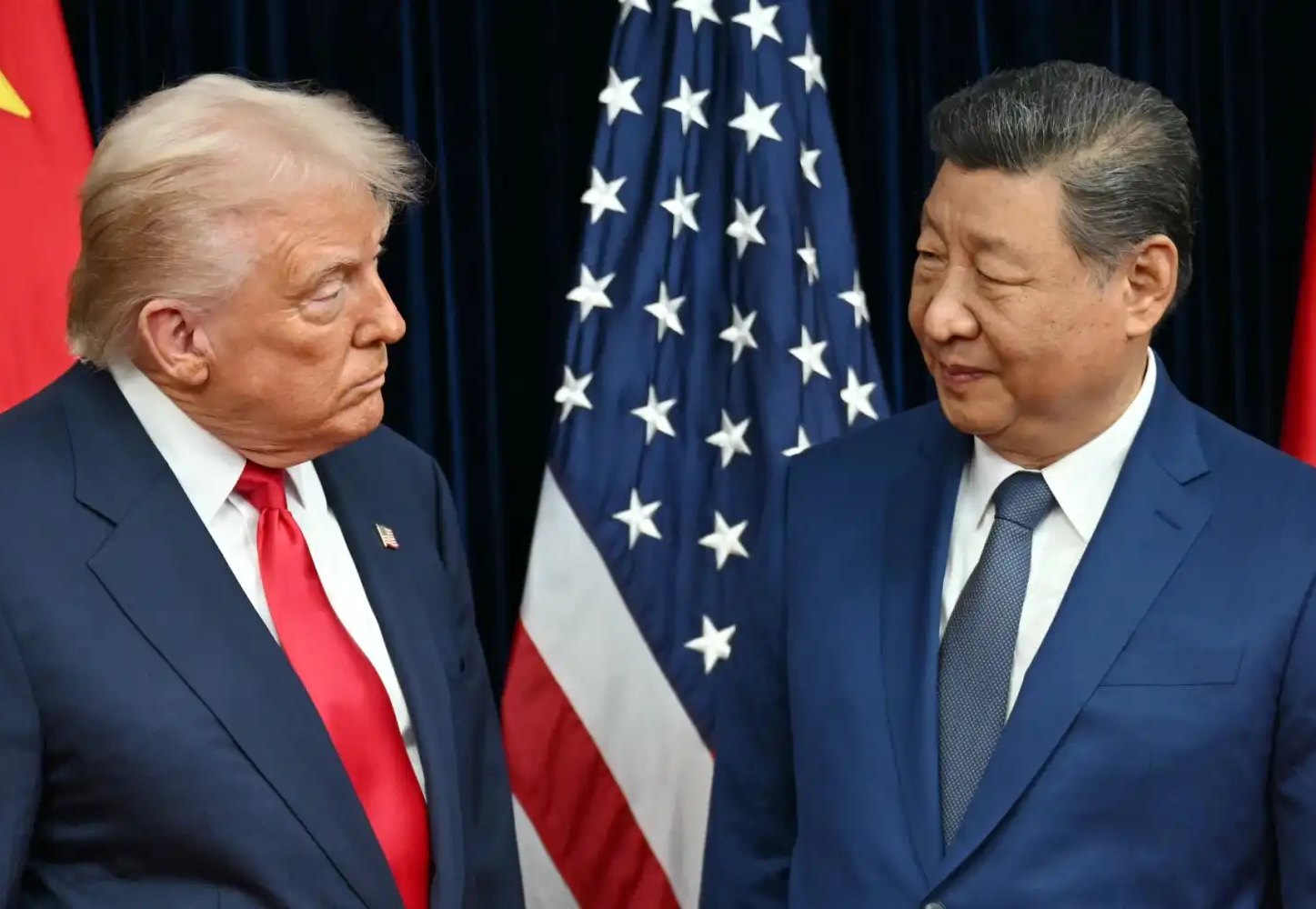
When diplomatic signals cross state lines, confusion often follows. Yet even by the standards of modern geopolitics, few statements have caused quite as much consternation as those recently delivered by David Perdue, the United States ambassador to China. Speaking in Beijing, Mr Perdue remarked that Donald Trump had directly asked Xi Jinping whether China would be interested in purchasing American weaponry. The assertion was as swift in triggering headlines as it was in forcing backtracks.Trump Administration officials scrambled to clarify that no military exports were planned, pointing out that federal law explicitly prohibits arms sales to Beijing.
The episode might be dismissed as an awkward diplomatic misstep by an envoy unused to statecraft, or as another instance of Mr Trump’s unorthodox, real-estate-style transactional negotiation tactics. But behind the immediate damage control lies a far more unsettling reality for Washington’s security partners in East Asia. The suggestion that American hardware could ever be offered to its primary strategic competitor exposes a deep structural tension in current foreign policy. It reflects an administration willing to treat hard-power guarantees as flexible bargaining chips in economic negotiations, leaving traditional allies like Taiwan, Japan, and South Korea contemplating an increasingly unpredictable future.
The Limits of Transactionalism
To understand the alarm in Western capitals and East Asian defense ministries, one must first examine the legal and historic backdrop. Ever since the Tiananmen Square crackdown, the United States has maintained strict prohibitions on transferring military equipment to China. That stance was reinforced by decades of policy designed to maintain a qualitative military edge for Taiwan and preserve stability across the Taiwan Strait. For a sitting ambassador to suggest that advanced defense kit could be auctioned off to Beijing upends the fundamental premise of American posture in the Indo-Pacific.
The logic driving such statements stems from a purely commercial view of international relations. Under this worldview, trade imbalances and tariff disputes take precedence over long-term alliance commitments. The administration appears to calculate that opening strategic markets or offering high-value goods might entice Beijing into major economic concessions.
Yet this commercial lens fails to account for how sovereign nations calculate security. Beijing is not seeking to outsource its national defense to American defense contractors. China’s long-term objective remains full technological self-reliance and regional military dominance. If Beijing were to purchase American hardware, it would serve primarily to dissect defense systems, inspect proprietary technologies, and identify tactical vulnerabilities. Rather than tethering China to Western supply chains, any export would merely accelerate Beijing's domestic research and development.
The Taiwan Dilemma
The immediate casualty of this transactional rhetoric is regional credibility. Taiwan, which relies entirely on American defense backing and arms sales to deter potential aggression, finds itself in a precarious position. For decades, Washington maintained a posture of strategic ambiguity regarding Taiwan, paired with consistent military hardware transfers. This balance signaled to Beijing that any attempt to alter the status quo by force would carry an exorbitant cost.
When Washington hints that military hardware could be traded to Beijing to settle trade disputes, strategic ambiguity curdles into strategic uncertainty. Officials in Taipei are left to wonder whether American security commitments are anchored in long-term geopolitical interests or subject to renegotiation whenever trade numbers dip.
This uncertainty extends beyond the Taiwan Strait. Allies across the Pacific, including Tokyo and Seoul, monitor these diplomatic overtures with growing concern. If the United States views military technology as a fluid asset rather than a binding alliance commitment, regional powers will inevitably adjust their own security calculations. The long-term consequence will not be a harmonious economic compromise with China, but an accelerated armaments race across Asia as nations seek independent deterrence.
Beijing’s Strategic Calculation
From the perspective of Beijing, these diplomatic mixed signals present an opportunity. Chinese strategists have long sought to drive a wedge between Washington and its network of security partnerships in Asia. By observing Washington’s willingness to float unconventional deals, Beijing gains valuable insight into American priorities.
China recognizes that an offer to buy arms is politically impossible under current law, but the mere floating of the idea damages American authority. It allows Chinese state media to portray Washington as an inconsistent partner whose security pledges fluctuate with political whims. More importantly, it signals that trade balances and economic leverage might ultimately outweigh strategic deterrence in White House decision-making.
Beijing’s primary strategic objective regarding Taiwan has always been to convince the island's leadership and populace that American support is conditional and fleeting. Statements that treat military transfers as negotiable commodities play directly into that narrative, eroding trust without securing a single trade concession in return.
Rebuilding Deterrence
Managing a rising power requires clarity, consistency, and structural strength. While economic negotiations and bilateral discussions are necessary components of foreign policy, blurring the line between commercial trade and military security risks undermining the global order.
Washington's allies do not expect static policies, but they do require predictable frameworks. If the United States intends to maintain its leadership role in the Indo-Pacific, it must reinforce the distinction between commercial negotiation and defense policy. Transactional gestures may occasionally yield brief leverage at the trade table, but when applied to military capabilities and alliance commitments, they carry a heavy long-term cost.
Restoring confidence across the Pacific will require clear, binding assurances that strategic commitments remain distinct from trade balances. Until that line is firmly re-established, both allies and adversaries will continue to question the stability of American policy in an increasingly fragile world.